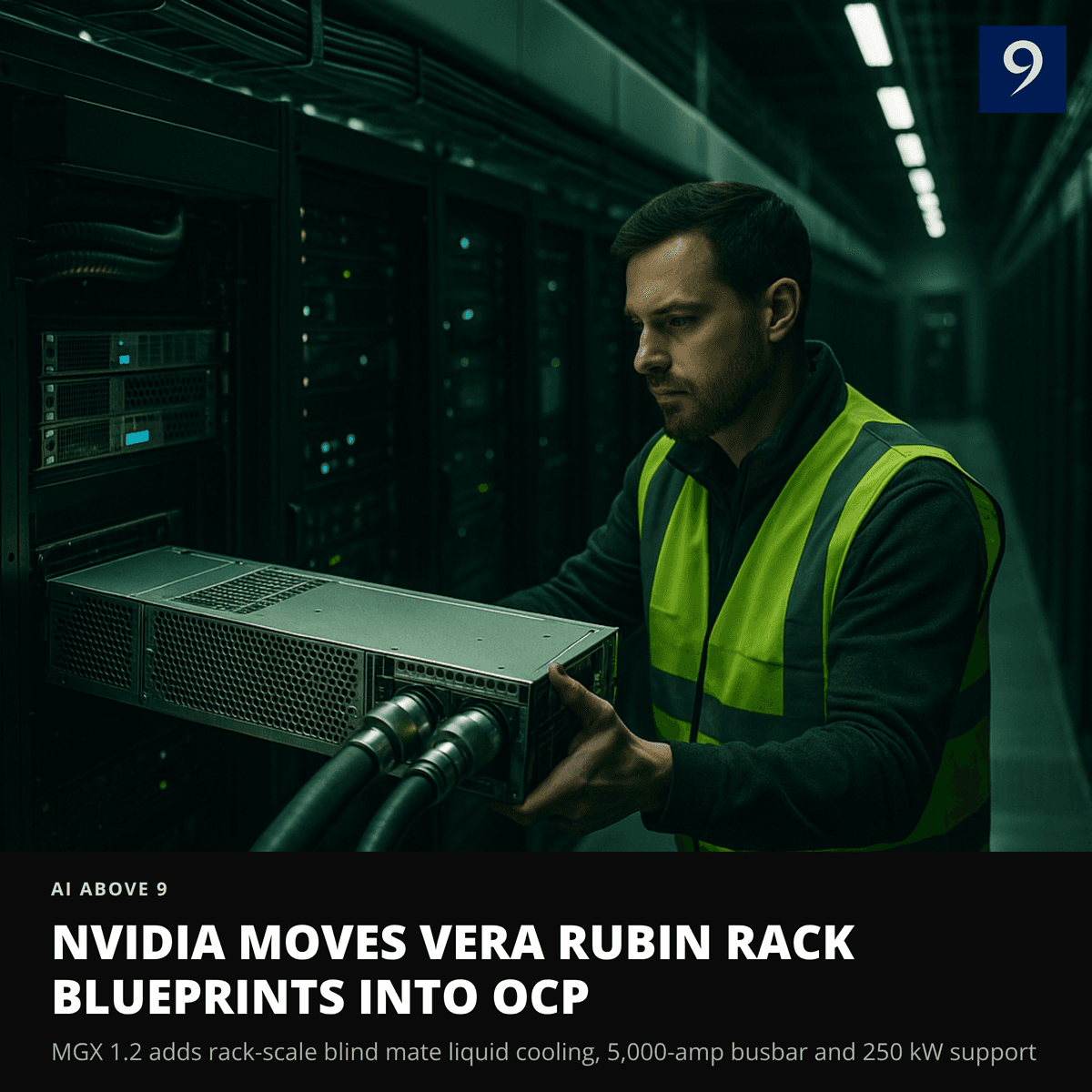
The blueprints for building AI at factory scale just moved out of closed labs and into a shared specification.
NVIDIA contributed its Vera Rubin rack and updated MGX 1.2 designs to the Open Compute Project, including the NVL72 compute platform and a Vera CPU rack intended for orchestration and sandboxed tool execution. MGX 1.2 adds rack scale, blind mate liquid cooling, a high capacity 5,000 amp busbar and support for racks drawing up to 250 kilowatts.
Why this matters is simple: until now, a lot of the messy work of power, cooling and rack interconnect was custom and proprietary. A common set of designs means system builders can standardize those hard parts instead of reinventing them, which speeds building large training clusters and lowers one barrier to running an in house AI factory.
How it actually works is easier to picture than the spec sheet. Think of a heavy duty kitchen cabinet where you slide a drawer into place and the plumbing and power snaps together automatically. Blind mate liquid cooling and standardized busbars do that for racks, so a hot compute tray connects to cooling and power without bespoke plumbing each time.
What changes now is practical: hyperscalers and large enterprises can design denser, liquid cooled deployments with fewer integration surprises, and hardware vendors can compete on compatible compute trays. It does not make AI infrastructure easy for everyone. These designs require 800 volt class power, specialised cooling plumbing and facility upgrades, not a regular server room.
The open question is whether independent builders will take these blueprints and turn them into competitive, lower cost alternatives to closed cloud offerings. That will show whether open standards can really reshape where and how the biggest AI models get trained.