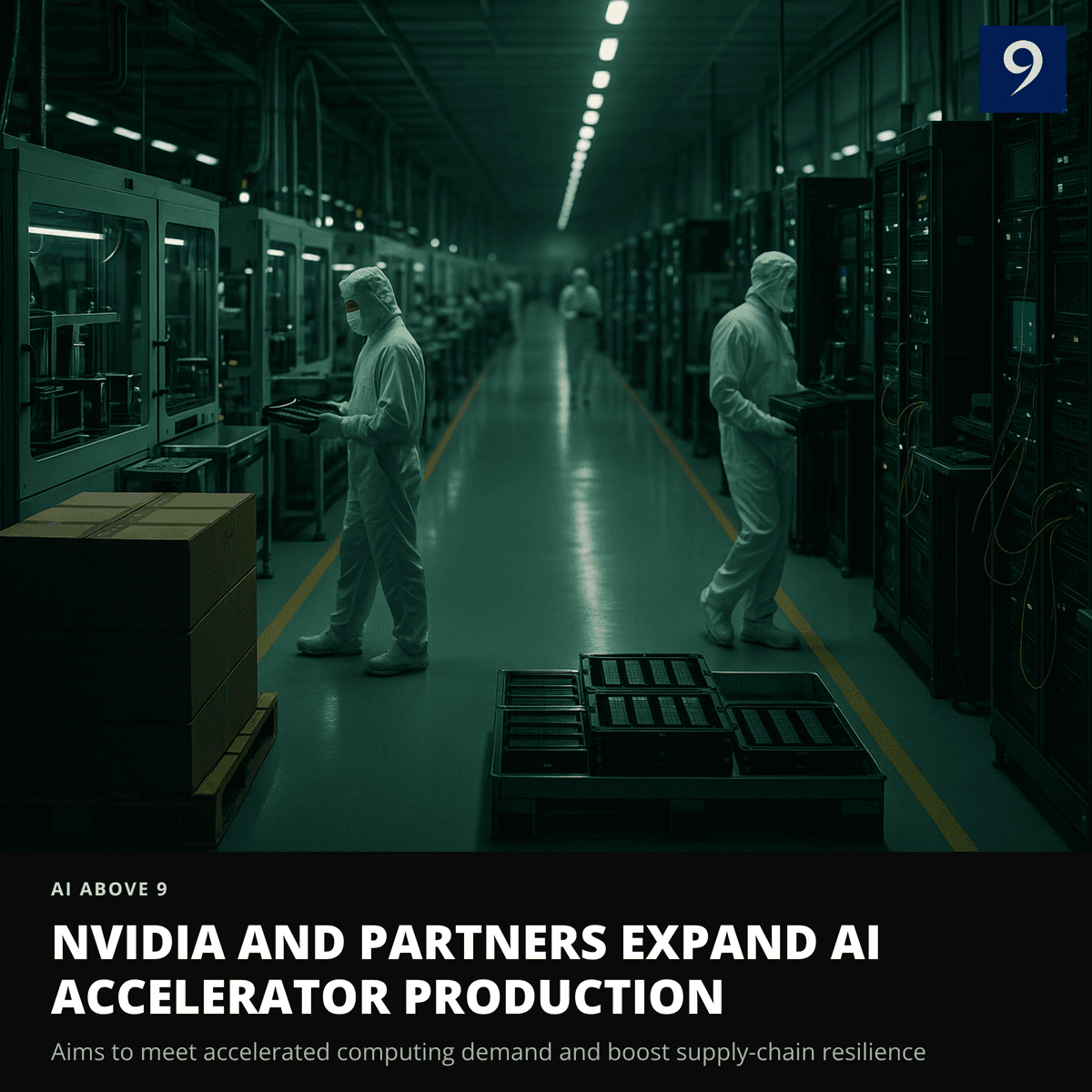
The factories that turn chip designs into usable AI hardware are about to get bigger.
On October 21, 2026, NVIDIA announced a coordinated capacity expansion across the supply chain that finishes accelerators: substrates, advanced packaging, testing and the optical engines that link components. Named partners include Amkor Technology, IBIDEN, King Yuan Electronics, Samsung Electro-Mechanics, SPIL and Unimicron Technology.
Why this matters is simple: AI systems need finished, tested hardware, not just chip designs. Bottlenecks in assembly and testing have been a hidden limiter on how fast companies can deploy more compute. Expanding those production steps means more complete accelerators can actually reach customers rather than queuing in factories.
Think of the effort as widening a narrow bridge between design and deployment. NVIDIA is not only adding lanes on that bridge but also funding the suppliers that feed it. That lets more finished products flow through the chain instead of getting stuck at a single step.
What changes now for businesses and operators is practical. Cloud providers and enterprises may see shorter lead times and fewer supply shocks. Startups that once had to rent scarce capacity could get better options to buy or build their own infrastructure. At the same time, this will improve resilience: having more factories and partners reduces the risk that a single failure halts production.
The important caveat is speed. Building and qualifying manufacturing capacity takes months to years, so the announcement is a necessary first step, not an instant fix. The question to watch next is whether shipments and price signals actually move the needle: will expanded capacity arrive fast enough to catch up with demand?