AI is starting to make physical choices in places people cannot easily reach.
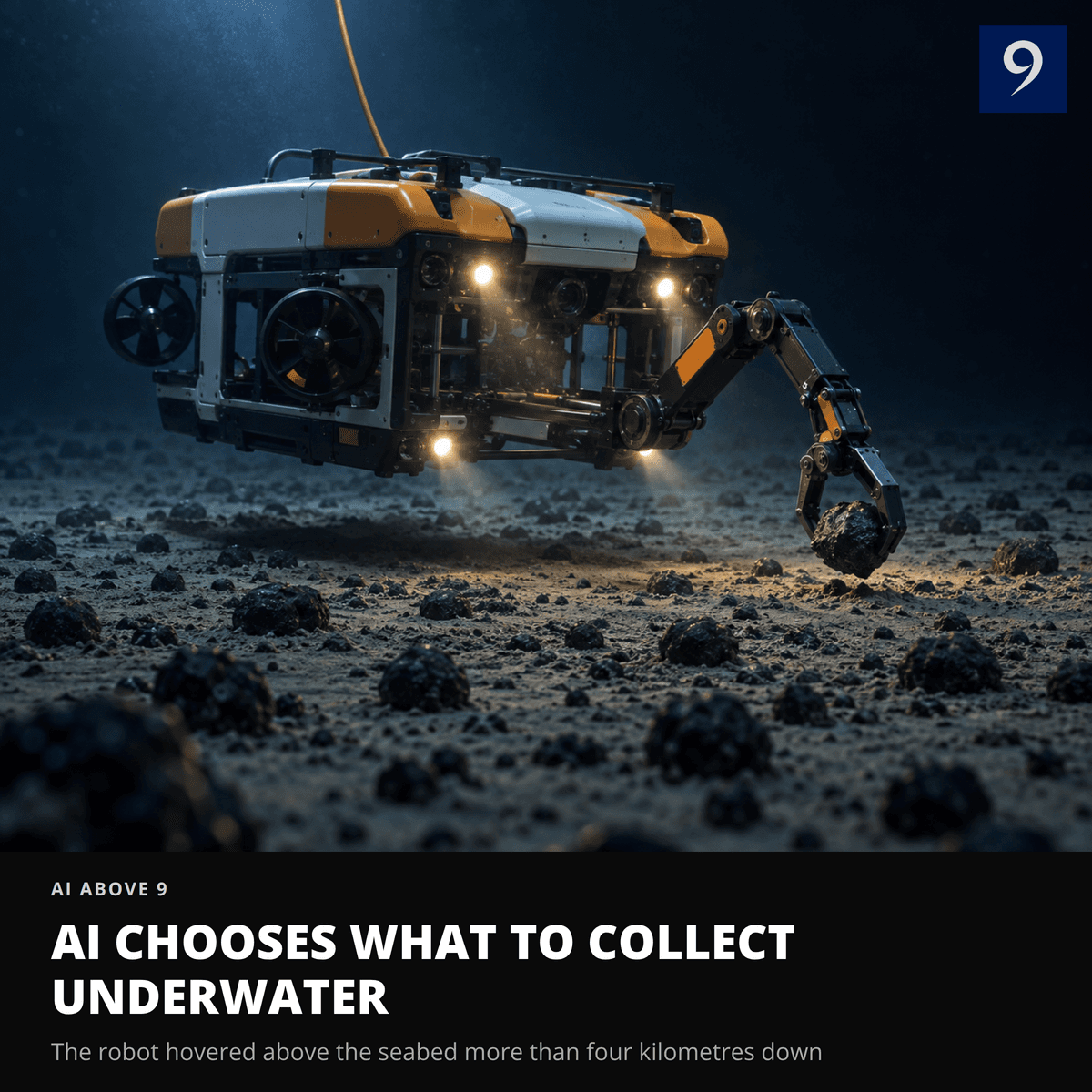
During a scientific expedition in September, Impossible Metals tested its autonomous Eureka robot in the Pacific. It collected mineral nodules from the seabed and returned to the surface.
The key step is not simply getting a machine underwater. It is asking it to distinguish what to collect from what to leave alone, without a person beside it to guide each move.
The robot uses AI to identify nodules and a claw to pick them up, while hovering rather than driving over the seabed. It did this more than four kilometres below the surface. Picture a careful hand picking selected stones from above the ground, rather than a vehicle rolling across it.
This is a very different kind of AI milestone from a chatbot producing a better answer: the machine has to act carefully in a remote physical environment.
But this was a field test, not a mining operation. Future deep-sea mining still requires regulatory approval, and one successful collection does not show how the system performs across a real operation.
Can it make those careful choices reliably at useful scale, while avoiding harm to marine life? That is the question this test leaves open.