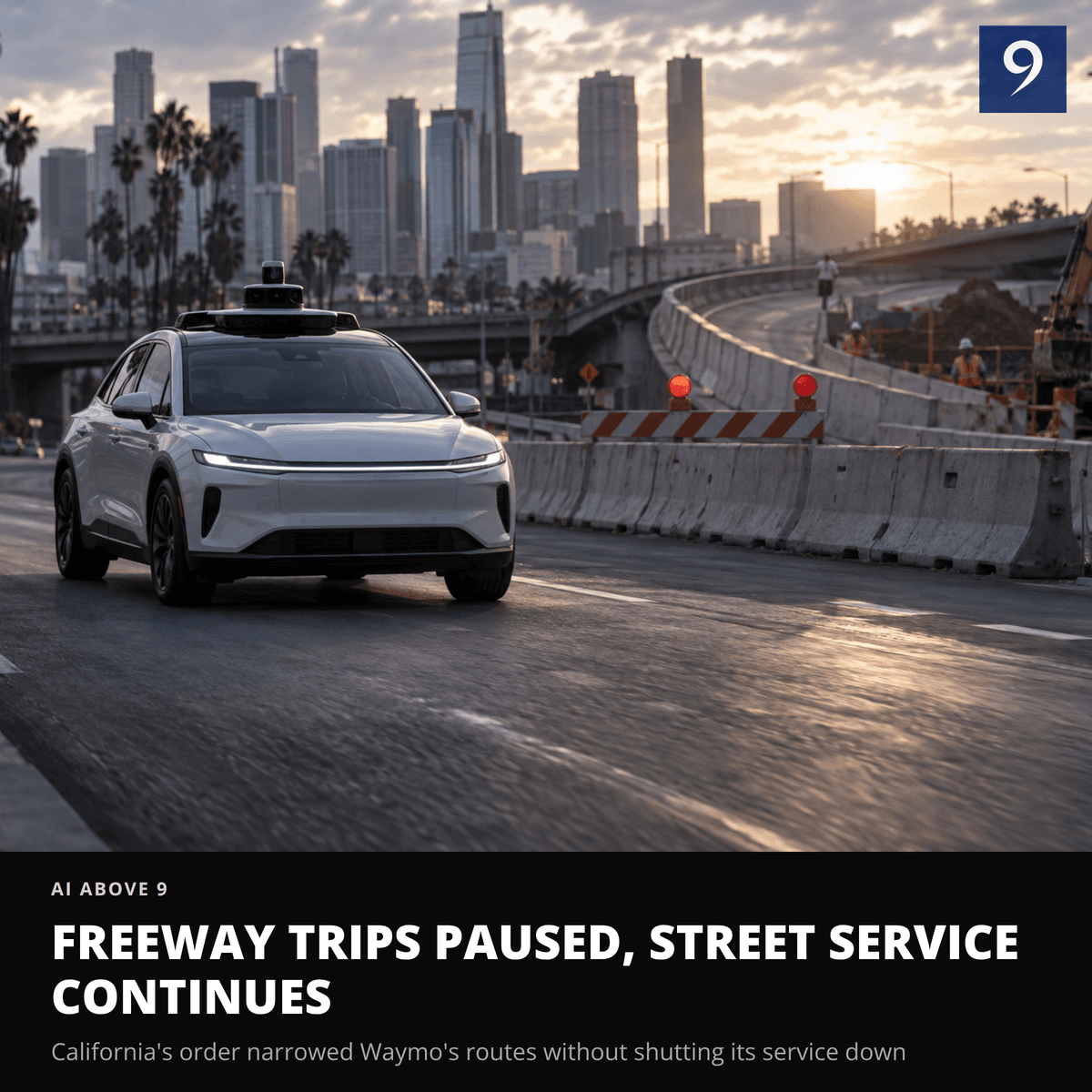
A safety restriction can redraw where a driverless taxi is allowed to work. It does not have to shut the whole service down.
California's Department of Motor Vehicles barred Waymo's driverless vehicles from state freeways after a series of incidents. The robotaxis had entered active construction zones. The agency called the freeway operation an imminent hazard to public safety.
Waymo has also temporarily paused freeway operations in its other U.S. markets while it evaluates performance. Its robotaxis continue to operate on surface streets.
For riders, this is narrower than a full shutdown: street trips continue, but freeway trips do not. The pause shows how a safety concern can change a service's boundaries before the service itself disappears.
Think of a taxi service that can still take local roads but has lost access to the highway. The service remains, but its useful reach shrinks.
Driverless services are not simply on or off. Their operating boundaries can shift when safety concerns emerge. Deploying autonomous vehicles means earning trust route by route.
What will Waymo's review find? And what will California's DMV need to see before it lifts the restriction?
AI Above 9 score: 9.1