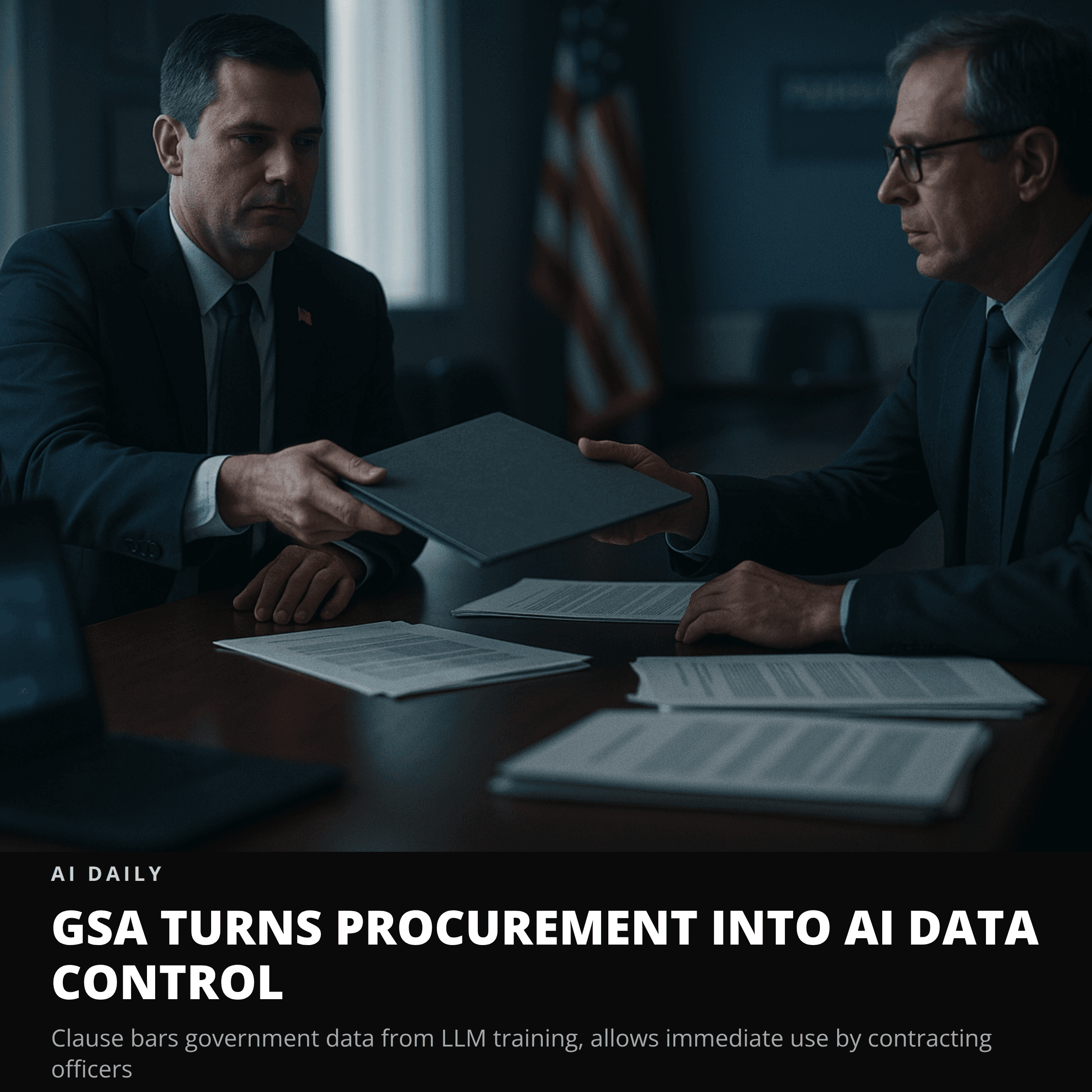
Building on our coverage from 17 days ago, the General Services Administration has issued an AI-specific acquisition clause that forbids contractors from using government data to train or commercialize large language models and requires stronger protections for how that data is handled.
GSA released the clause as a class deviation to its procurement rules. It is formally effective on October 19, 2026, but the agency says contracting officers may start using it immediately and can modify existing contracts at their discretion.
This turns procurement into a direct tool of AI governance. Instead of relying only on vendor promises, the government will now bake data-use limits and technical safeguards into the contracts it signs, which changes what vendors can offer when they bid for federal work.
Under the clause, government data processed in large language models cannot be used to train those models, inform advertising, or be sold to third parties. Contractors providing AI services must also transmit data encrypted and keep audit logs so officials can track how data was handled. Think of it like lending a recipe to a caterer: they can use it to cook for you, but they may not take the recipe home and sell it.
In practice, vendors will need separate, non-training versions of their services or clear technical boundaries to prove compliance. Contractors that rely on pooled training data face a real disadvantage when pursuing government work. Contracting officers gain an immediate lever to demand technical safeguards in new and existing deals.
Industry groups say the clause adds flexibility and signals more rulemaking to come. The open question is enforcement: will agencies actually check logs and reject offers that blur the line, or will compliance become checkbox paperwork? How that plays out will determine whether procurement can meaningfully stop sensitive government information from seeding powerful commercial AI.