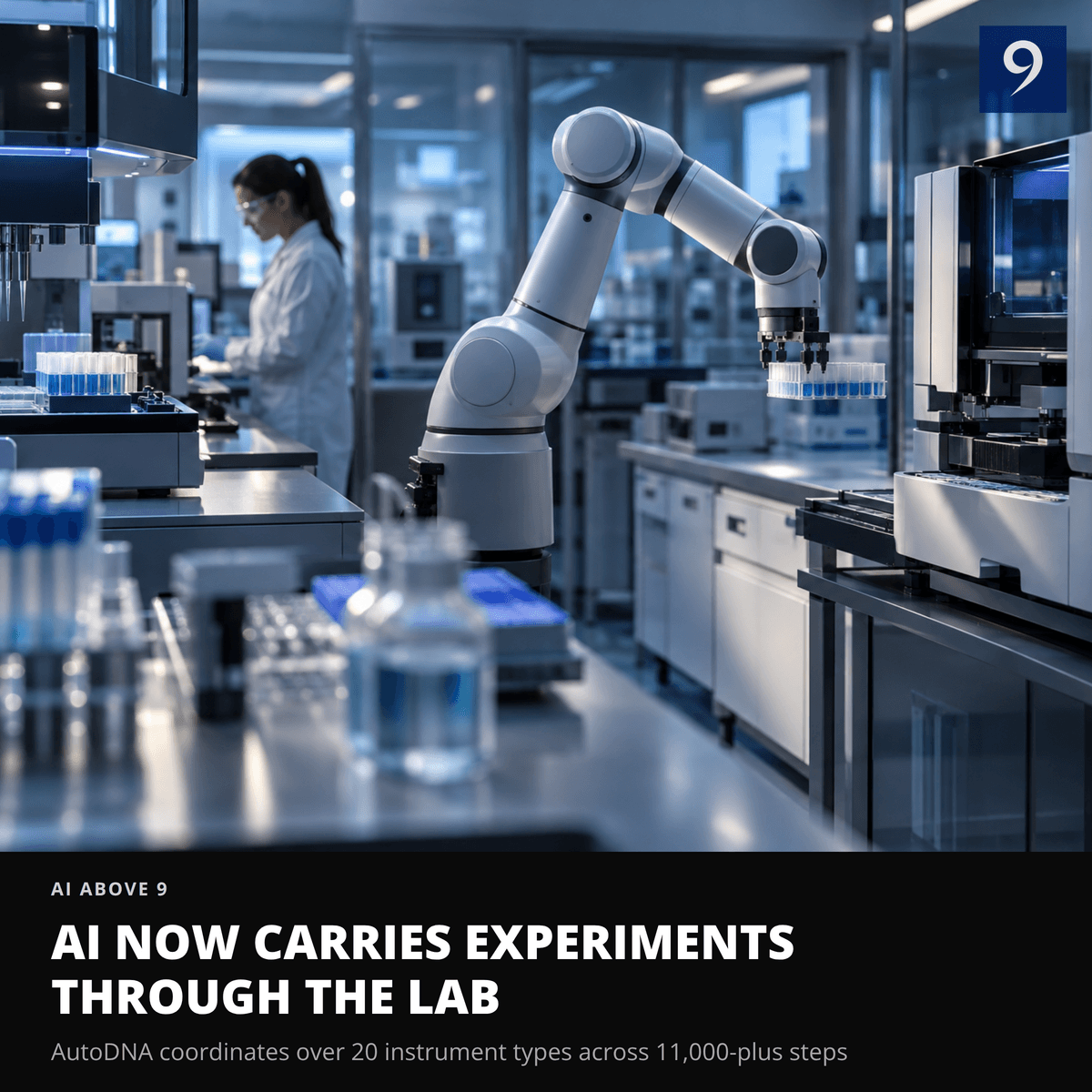
An AI system can now do more than suggest a biological experiment: it can carry one out across a working lab.
Nature reports that AutoDNA coordinates lab instruments through more than 11,000 steps, from preparing genetic material to reading it. In representative tests, it produced as much DNA as methods experts had carefully optimized.
The important shift is that AI is no longer confined to recommending what scientists should try. It can also carry out the physical work that makes an experiment happen.
Think of a conductor cueing each instrument in turn. Each machine handles its part, while AutoDNA keeps the experiment moving from one stage to the next.
For scientists, that means less need to steer every step by hand. People still need to maintain the equipment and replenish chemicals and lab supplies, so this is not a lab that runs without human support.
The next test is whether this kind of setup can make complex experiments easier to repeat, and what discoveries become possible when scientists can focus more on the questions than on operating each machine.