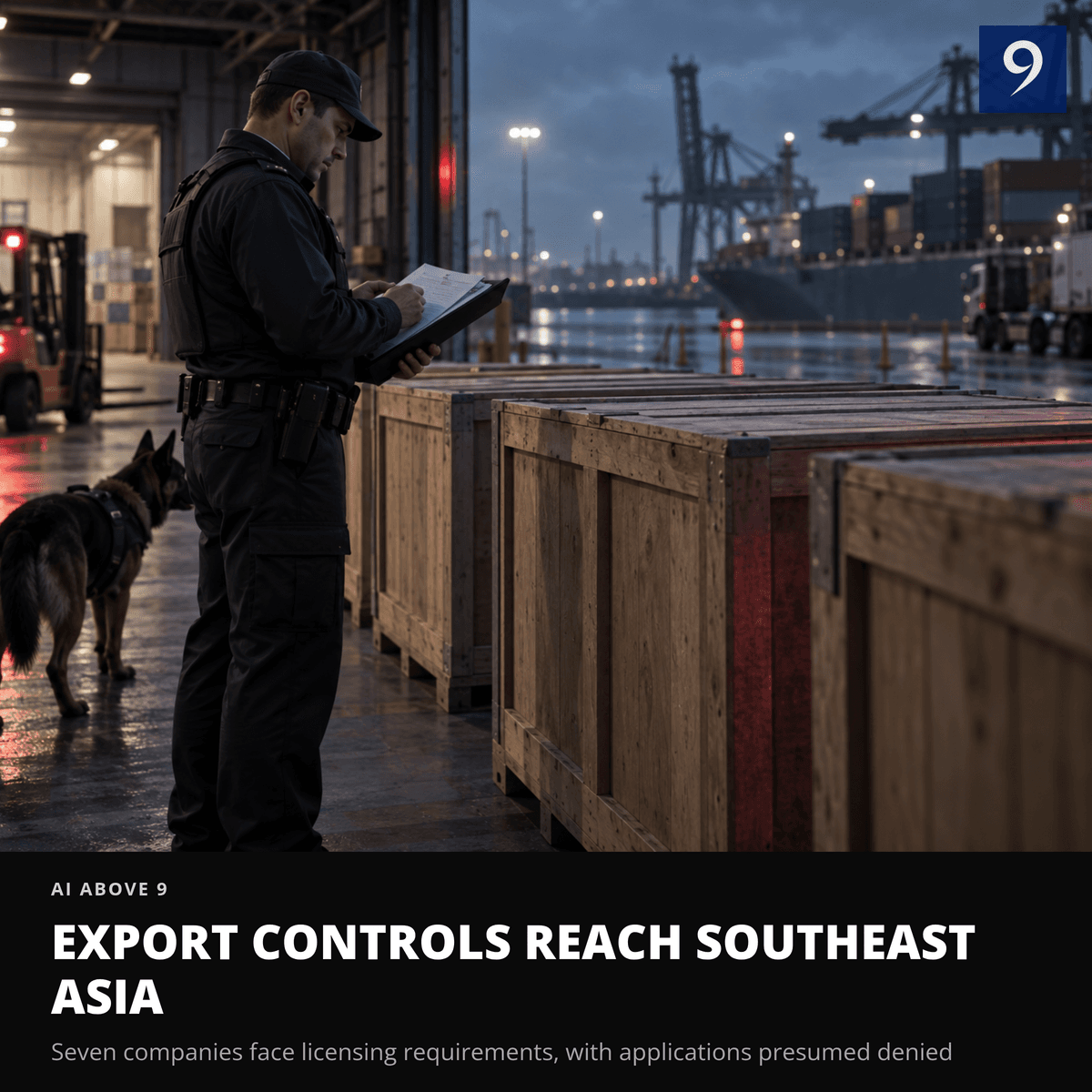
U.S. export controls on advanced-computing goods are reaching companies in Southeast Asia. Officials say the concern is that goods could be diverted to unauthorized users.
The U.S. Commerce Department's Bureau of Industry and Security added seven entities to its Entity List. The list triggers U.S. export restrictions. The companies are based in Malaysia, Singapore and Thailand. BIS says they pose a significant risk of diversion to unauthorized users or uses.
That matters because advanced-computing goods help power the infrastructure behind advanced AI. Rules about who can receive them can shape where that capability gets built.
When a listed entity is involved in a transaction, any item covered by U.S. export rules needs a license. Applications face a presumption of denial. Think of it as a checkpoint: if a listed company is involved, the shipment needs permission, and the default answer is no.
For businesses, the restriction is specific: it applies to covered items in transactions involving the listed entities, not all trade with those three countries. Suppliers and customers will need to check who is involved before moving covered goods.
AI competition is shaped not only by software, but by who can obtain the computing goods behind it. The open question is whether these controls can curb diversion while keeping legitimate trade across the region workable.
AI Above 9 score: 9.4