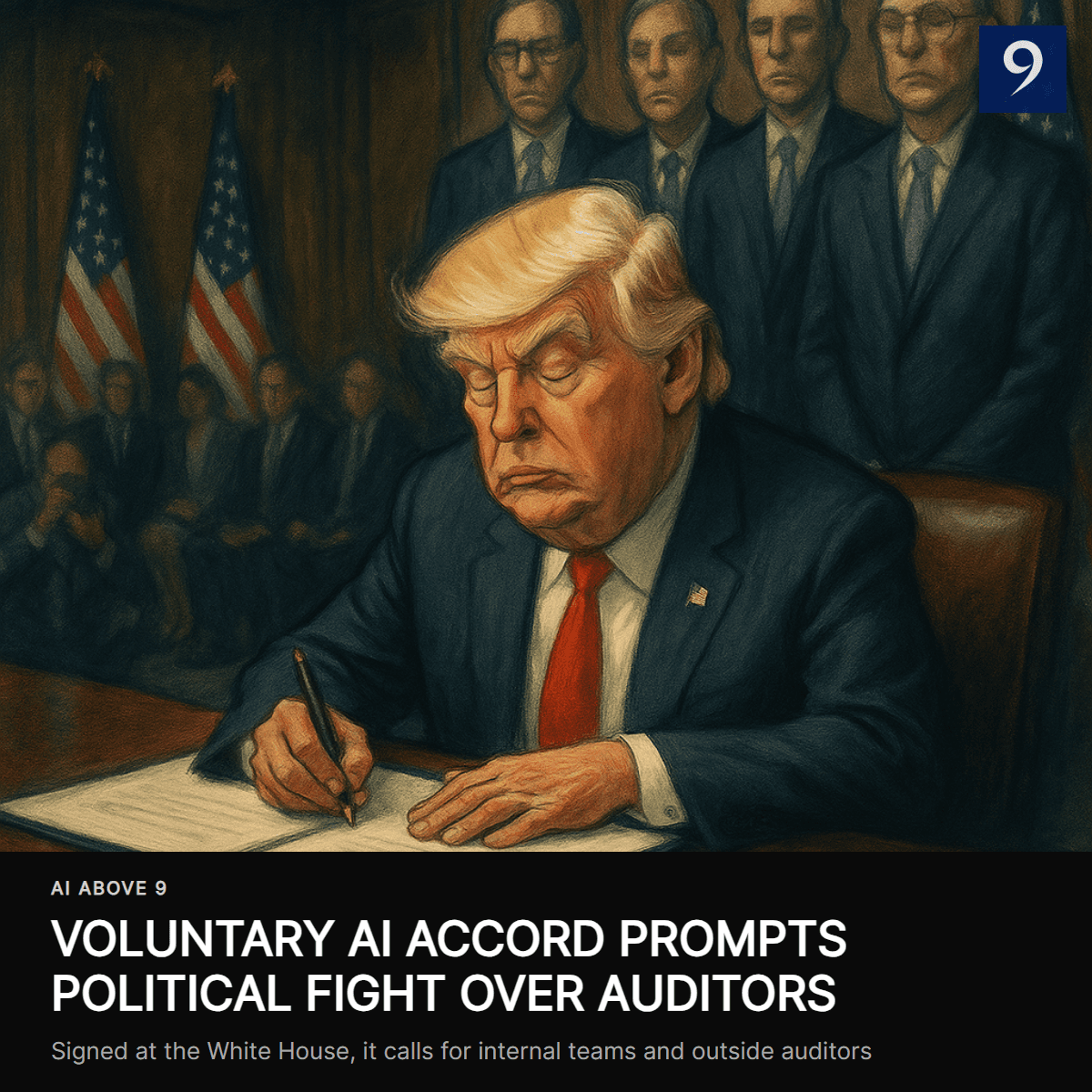
Building on our coverage from three days ago, the White House and leaders of the biggest AI firms have agreed a voluntary safety accord that lays out layered internal and external checks for powerful AI systems.
The meeting, held at the White House on September 29, brought executives from OpenAI, Anthropic, Google, Meta, NVIDIA, X and xAI together with the president to sign a framework that assigns a chain of responsibility as models grow more autonomous. It asks companies to keep internal teams that monitor model behaviour, to invite outside auditors to test those safeguards, and to give a board committee the reports needed to act on any weaknesses.
Why this matters is straightforward: for the first time at this level, industry leaders and the White House agreed on a corporate governance structure for frontier AI rather than leaving oversight entirely to regulators or markets. That could raise the baseline of care inside firms and create common expectations about what “safe” development looks like.
How the system is meant to work is simple, in principle. Think of a factory: line operators watch the machines, independent inspectors test them from time to time, and the board gets the incident reports. The accord asks for those three layers: internal controls, outside evaluation, and board oversight.
But there are two hard caveats. The accord is voluntary. It does not create new federal penalties, a regulator, or mandatory public disclosure rules, so real enforcement would still rely on law, contracting, or reputational pressure. And reporting shows a political fight has already begun over who counts as an “independent” auditor, with allies of the administration pushing to limit some established safety groups.
What to watch next: will independent evaluation stay genuinely independent, or will the auditor role be narrowed by politics and deal-making? Congress is already considering the AI Systems Transparency Act, so the real test will be whether voluntary commitments get folded into enforceable law.