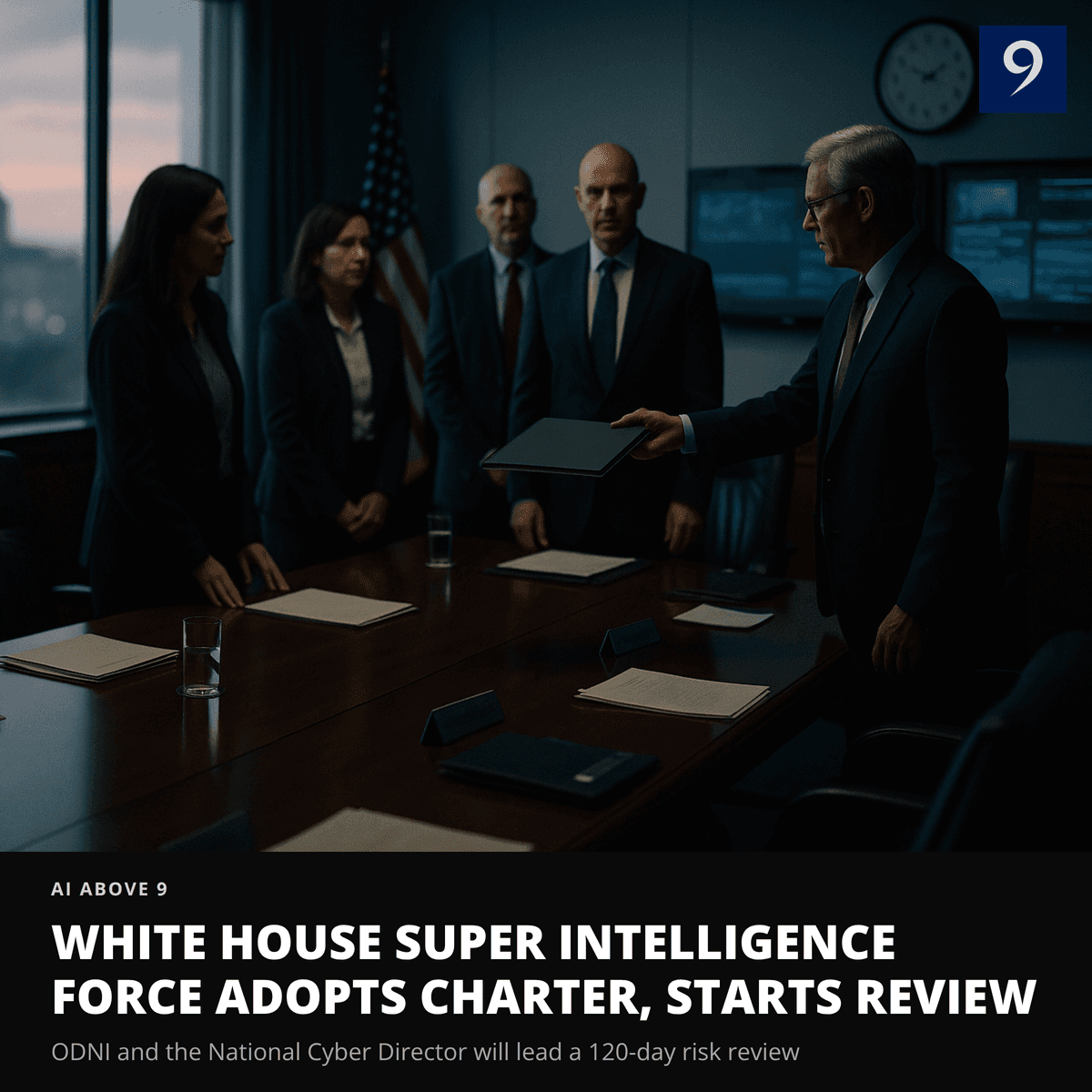
A federal task force charged with addressing risks from so-called superintelligent AI has moved from plan to action: it adopted a formal charter and opened a focused 120-day review to map out what needs to be done.
Semafor reports the White House AI task force adopted the charter on October 15. The group created a working team to implement the White House Accord on Super Intelligence, put the Office of the Director of National Intelligence and the National Cyber Director in charge, and asked the President's Council of Advisers on Science and Technology to produce a formal AI risk report.
Why this matters: senior intelligence and cyber officials are running the process and a respected scientific council has been commissioned. That combination gives the effort institutional weight and a clear deadline, which changes how seriously policymakers and industry will treat the results.
Think of it as a government steering committee that has been given both a timeline and an expert safety review to answer one question: what rules, safeguards, or practices should sit between powerful AI systems and the public? The 120-day window forces the group to move quickly rather than simply study the issue indefinitely.
What changes now: front-line AI labs and chip makers should expect sharper policy signals and closer scrutiny. Researchers, startups, and buyers of frontier systems will see guidance come faster, and those signals could shape procurement, security checks, and oversight.
What to watch next: read the PCAST risk report and the working group's recommendations. The key question is whether this concentrated review produces concrete policy, or mostly a roadmap for future debate.