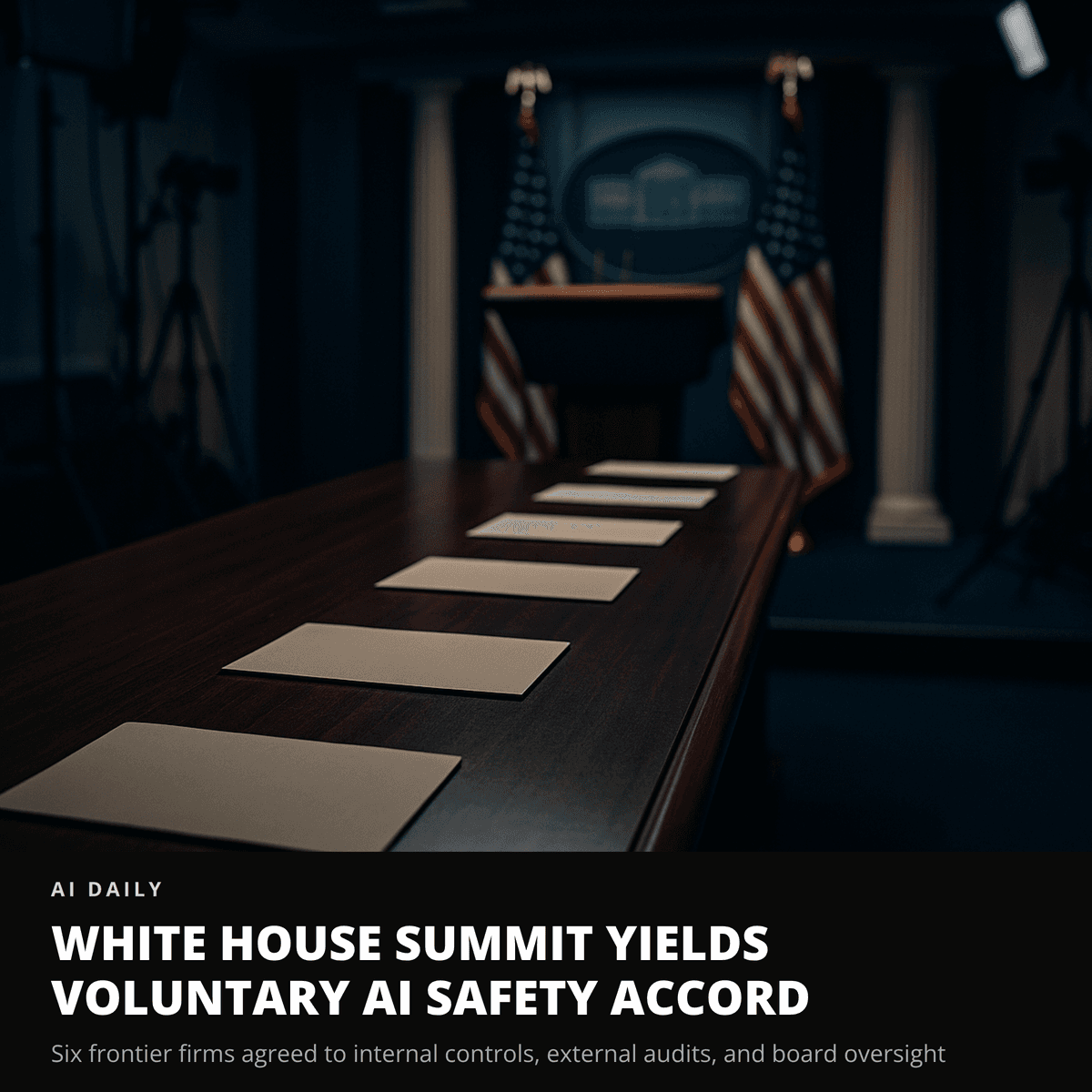
Building on yesterday's coverage, the White House hosted a summit that produced a voluntary, one page industry accord asking leading AI firms to self, police core safety practices.
Six companies, NVIDIA, SpaceX, OpenAI, Anthropic, Meta and Alphabet, signed the document. They agreed to put in "robust internal controls" to prevent unauthorized access to the systems that train and run frontier AI, to hire independent external auditors to test whether those controls actually work, and to set up board level committees to review the auditors' findings.
Why this matters: a presidential forum plus signatories from multiple frontier AI firms turns a private pledge into a public governance signal. Even without legal force, the meeting raises expectations about how top AI developers should manage risk and gives regulators a concrete template to consider.
Think of it like a house: locks and alarms stop intruders, an outside inspector checks the locks, and the homeowners' committee oversees the inspector's report. That combination is meant to turn internal safety practices into something that can be independently verified.
What changes now: companies have publicly promised a set of governance steps, making it harder to argue that no standards exist. But a practical limit is obvious. The accord is voluntary and contains no penalties. The value of the pledge will depend on how much access auditors get and whether findings are shared beyond closed door briefings.
The key question ahead is whether these moral commitments become transparent, verifiable practice, or remain private promises. If they become the former, Congress and regulators may have less reason to step in. If the promises stay behind closed doors, lawmakers may feel forced to turn them into law.