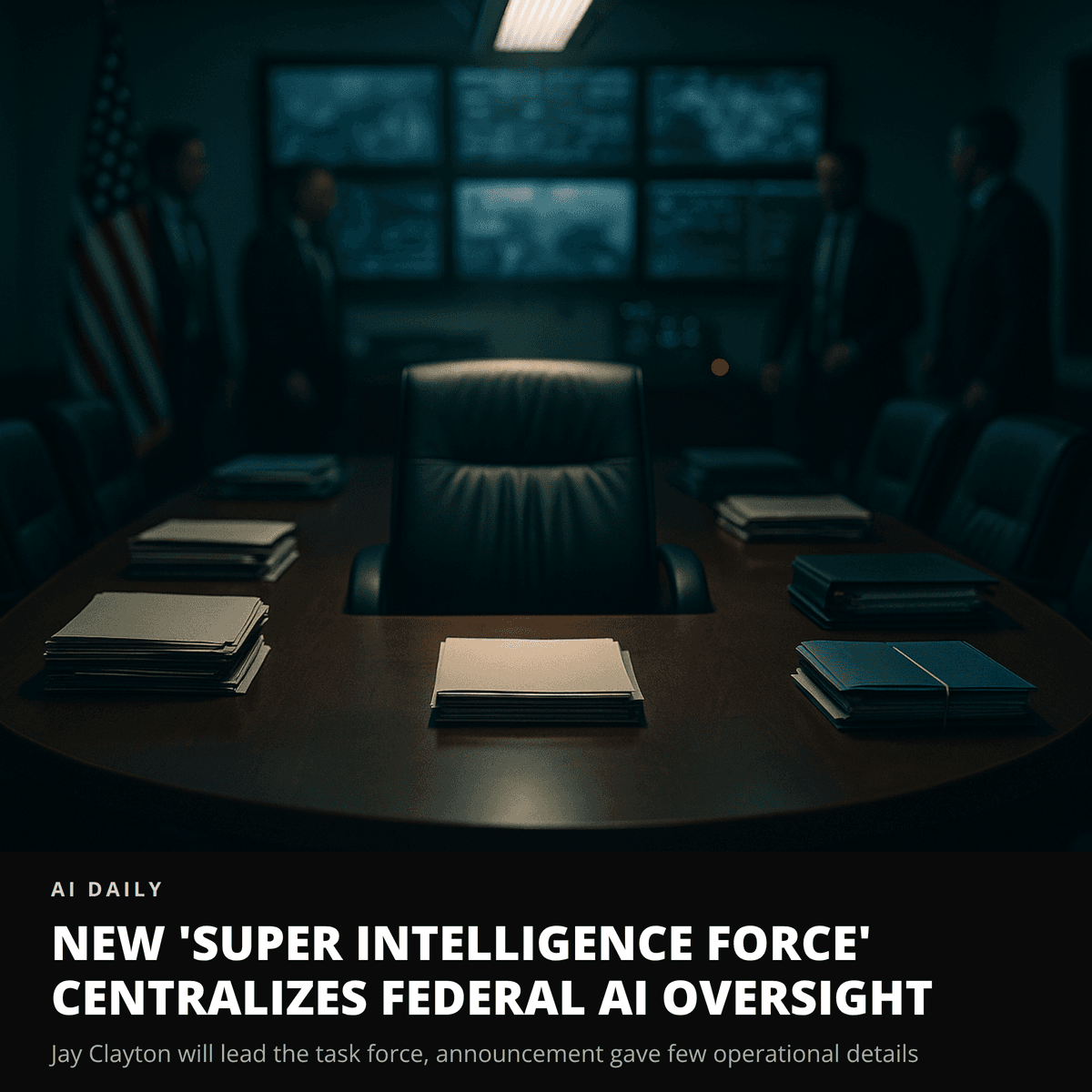
Building on yesterday's White House AI summit, the administration has centralized cross, agency AI oversight by creating a federal "Super Intelligence Force" and placing the Director of National Intelligence at its head.
Jay Clayton will lead the new task force. Officials named to help run it include FTC Chair Andrew Ferguson, OPM Director Scott Kupor, and a Pentagon research and technology official, Emil Michael. Reports say the force will focus on AI product safety and U.S. industrial strategy, but the announcement gave almost no detail on authorities, oversight, or legal powers.
Why this matters: Washington just signaled that AI is now a whole, of, government priority. Instead of leaving safety and competition to individual agencies, the administration is trying to coordinate them from a single node that spans trade, personnel, defense, and intelligence.
Think of the Super Intelligence Force as a control room, not a factory: its job is to bring agencies together, set common priorities, and push coordinated action across government. That makes the idea powerful, but only if the room actually gets the authority to act.
What changes now is mainly political and procedural. Companies that signed the summit's voluntary safety commitments will face a more unified federal audience. Regulators and defense procurement teams may move faster toward shared standards. Practically, though, nothing on the ground changes until the task force's powers and processes are published.
The real test is ahead: will this body gain teeth, or will it stay a coordinating office? How the administration answers that will decide whether this is governance reshuffle or genuine federal control of AI safety.